Skip to product information
Variegated Calamondin Orange Tree (Citrus x citrofortunella mitis ‘Variegata’)

Variegated Calamondin Orange Tree (Citrus x citrofortunella mitis ‘Variegata’)

$52.00
SKU: C2001-4G

4" Pot SizeGrafted Plant

Cannot be shipped to TX, FL, AZ, CA
103 available

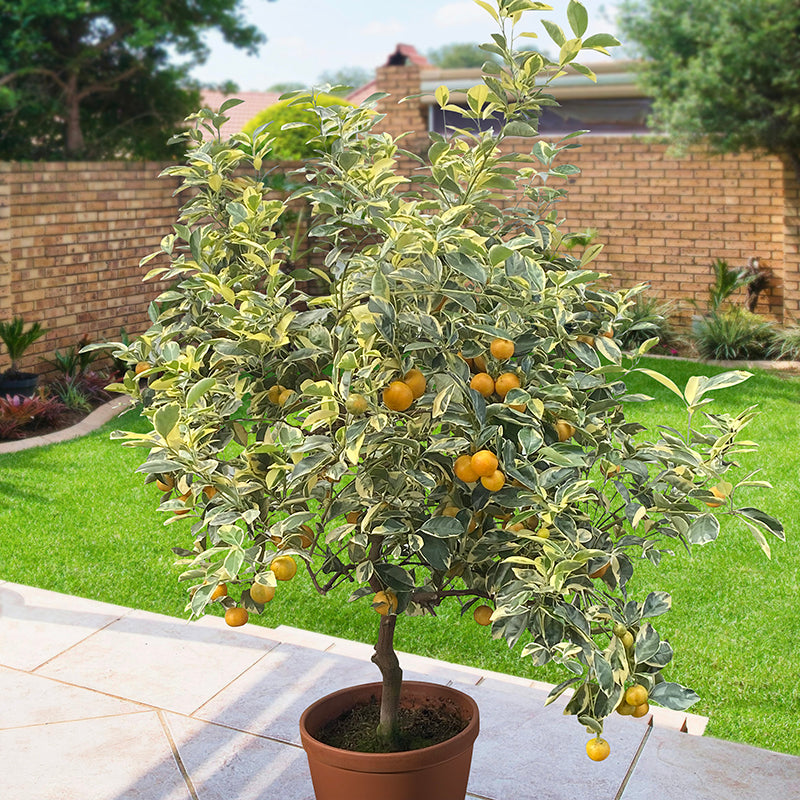
The famous Calamondin Orange has a new twist! Variegated cream and green foliage makes this a very desirable ornamental fruiting plant. But don’t be fooled, the small, juicy, sour oranges are also edible, and are often used for preserves or cooking. Fragrant flowers appear spring to summer and a heavy set of fruit follows, ripening in time for the holidays. The ripe fruit holds well on the plant adding to its decorative appeal. The variegation does slow its growth somewhat, but slower growth is desirable for container culture. This is a grafted plant that blooms and fruits sooner.

Available in a 4" pot.

✅60-Day Guarantee - Rest Easy, your plant is protected!

Learn more about our guarantee.

🪴Ready to Grow - This is a healthy starter plant, full of life!

What you will receive.

📦Quality Plants Grown by Experts. Packaged with Care.

Ensure a healthy transition to your home.

Light Requirements
  • Full Sun
Plant Height (mature height when grown in a container)
1-3'
Bloom Season
  • Spring
  • Summer
Minimum Indoor Temperature

50

Plant Hardiness Zone
  • 9
  • 10
Plant Special Features
  • Fragrant
  • Edible
Plant Care

(SIT-rus)

Light: Full sun, a southern exposure.

Temperature: Maintain indoor temperatures above 40°. During the winter; however, temperatures above 60° are preferred in order for the plant to absorb nutrients and maintain active growth. Exception: The Citrus aurantifolia “Key Lime” is a tropical citrus and requires that indoor temperatures be maintained above 60°. It will not tolerate temperatures below that.

Humidity: Preferably 50% or higher; however, they will tolerate low levels with no harm.

Watering: Bring the soil to a state of visual dryness between waterings. It’s best to grow in a clay pot, which will help with increasing air exchange to the root system. When repotting, don’t over-pot. Keeping them a little under-potted creates a healthier environment for the root system.

Fertilizer: Go easy on the fertilizer: ½ tsp of fertilizer per gallon of water every two weeks. Use a balanced fertilizer like a 10-10-10 or 7-9-5. Excessive fertilization can create difficulties in culture, so it’s best to err on the lean side.

Pruning: Prune young plants to encourage branching. This will help create a bushy plant and stronger limbs to hold the heavy fruit. The best time to prune is late spring after flowering and when in active growth.

Insects and Disease: For the most part, citrus is not highly susceptible to insects. However, they will attract scale, mealy bugs and mites if infected plants are nearby. Citrus plants in general are susceptible to root disease, but following the water recommendations and keeping temperatures no lower than 60° will help negate the problem.

Comments: All of our varieties have thorns, which can be removed at no harm to the plant.

Videos

Other Resources

Recently Viewed