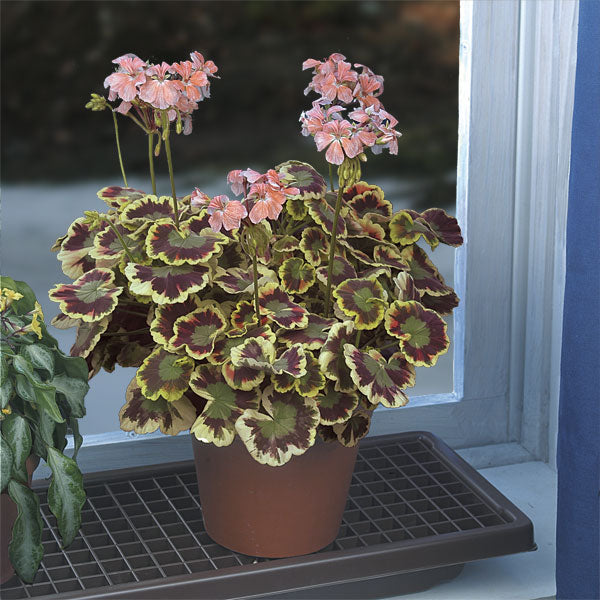
(pel-ar-GOH-nee-um)
Light: Full sun, a southern exposure, is necessary for best floral production.
Temperature: Maintain indoor temperatures above 40°. However, 65° or higher will create better results during the winter months.
Humidity: Preferably 50% or higher; however, they will tolerate low levels with no harm. Periods of high humidity do encourage foliage diseases.
Watering: Bring soil to a state of visual dryness between watering. When watering, thoroughly saturate soil until a little water runs out of the bottom of the pot. Growing in a clay pot will help maintain a healthy root system.
Fertilizer: Fertilize with ½ tsp of fertilizer per gallon of water once a week. Use a balanced fertilizer like a 15-15-15 or a blooming fertilizer like a 7-9-5. If leaves become pale or older leaves turn yellow and fall excessively, increase fertilizer to twice a week until they green up. Discontinue during the winter or when light levels are low.
Pruning: Any time growth is excessive.
Insects and Disease: Insects are generally not a problem. However, they are susceptible to foliage and root disease. Be attentive to watering and provide drier air.
Comments: They make wonderful indoor plants because the home environment is conducive to their humidity requirements.