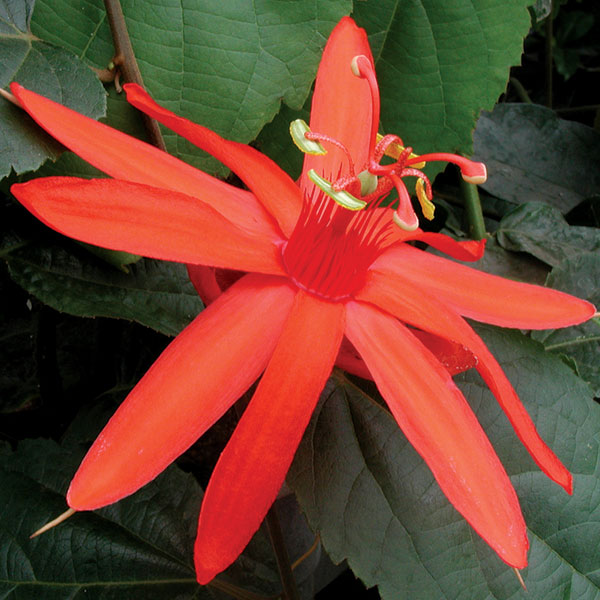
(pass-ih-FLOR-uh)
Light: Full sun, a southern exposure, is necessary for optimum growth and flowering. If flowers fail to open, it is usually due to insufficient light.
Temperature: Maintain a minimum temperature of 60°. Warm temperatures above 65° will keep it growing and flowering through the shorter days of the year. Some varieties will tolerate cooler temperatures.
Humidity: Preferably 50% or higher; however, they will tolerate low levels with no harm.
Watering: Bring the soil to a state of visual dryness between waterings. When watering, thoroughly saturate the soil until a little water runs out of the bottom of the pot. Growing in a clay pot will help maintain a healthy root system.
Fertilizer: Fertilize once a month with ½ tsp of fertilizer per gallon of water. Use a balanced fertilizer like a 15-15-15 or a blooming fertilizer like a 7-9-5. If leaves become uniformly pale, increase frequency to every 2 weeks. Important: Over-fertilization of Passifloras reduces flowering.
Pruning: When growth is excessive, prune back vining growth. Hard pruning is tolerated with ease. Remember that flowers form on young growth, so pruning will discourage blooming for a short time.
Insects and Disease: Passifloras have the greatest susceptibility to spider mites. Attention needs to be given to signs of infestation, which begin as small, light spots the size of pinpricks appearing on the leaf. The mites are small and are found on the undersides of the leaves. A magnifier may be needed to see them. Plants that have been summered outside often come in with residual populations. Spray 2 applications, 1 week apart, of pure Neem oil diluted 1 ½ teaspoons to the quart of water to which a dribble of dishwashing liquid is added. Iron chlorosis is a common problem; it can be caused by p.h level or a cold root system. Treat with liquid iron or brew a cup of black tea and water the plant with it. Also, try using an acidic fertilizer.
Comments: If plants have summered outside, check carefully for bug infestations when brought inside.