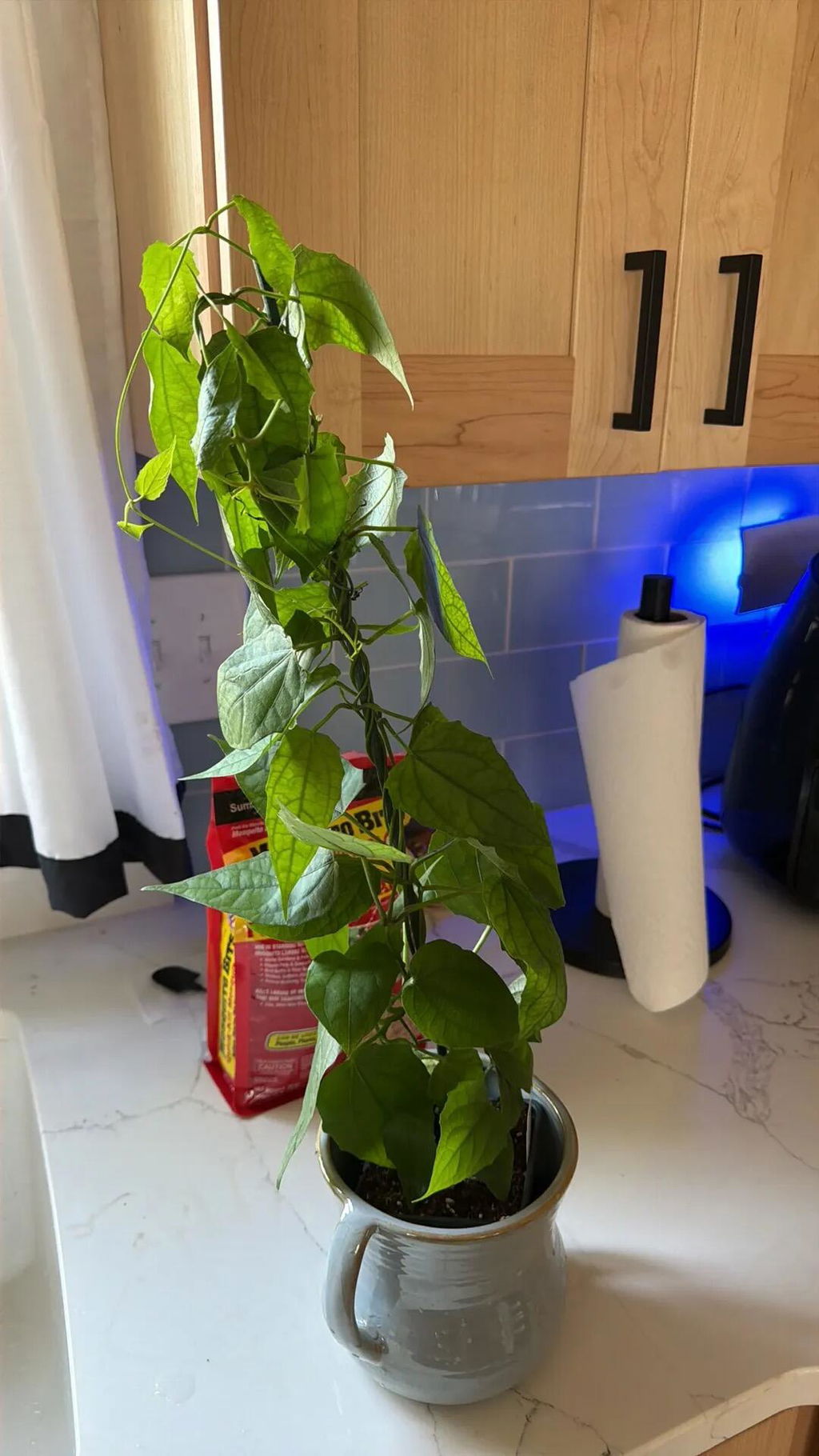
(thun-BER-jee-uh)
Light: Full sun, a southern exposure. To flower well, they need some direct sunlight. They are light sensitive, which means that the shortening day length of fall is what stimulates flowering.
Temperature: Maintain indoor temperatures above 60°, especially during the winter months when light is low.
Humidity: Preferably 50% or higher; however, they will tolerate low levels with no harm.
Watering: Bring soil to a state of visual dryness between watering. When watering, thoroughly saturate soil until a little water runs out of the bottom of the pot. Growing in a clay pot will help maintain a healthy root system.
Fertilizer: Fertilize with ½ tsp of fertilizer per gallon of water every two weeks, if grown under high light, ½ tsp of fertilizer per gallon of water every week. They are rapid growers; so if growth becomes too excessive, reduce the amount of fertilizer given.
Pruning: Over a growing season, they can become large vines that will not fit well in the indoor growing space. Pruning of the vining stems should be done after the blooming cycle is complete, usually in late spring. At this time, they can be pruned severely, from which they quickly re-sprout. Another pruning can be done only if needed in late summer; from there on, the vine should be allowed to grow until buds appear.
Insects and Disease: Thunbergias have the greatest susceptibility to spider mites. Attention needs to be given to signs of infestation, which begin as small, light spots the size of a pinprick appearing on the leaf. They are small and are found on the undersides of the leaves. A magnifier may be needed to see them. Plants that have been summered outside often come in with residual populations. Spray 2 applications, 1 week apart of pure Neem Oil diluted 1-1/2 tsp to the quart of water to which a dribble of dishwashing liquid is added. Spray the entire plant in the cool of the day and repeat for 4 days.
Comments: They are prone to edge burn, which is the browning of the tips of the leaves. This condition is not fatal but difficult to control.