
Handwritten Greeting Card with your order - Meyer Lemon

4" Pot Size
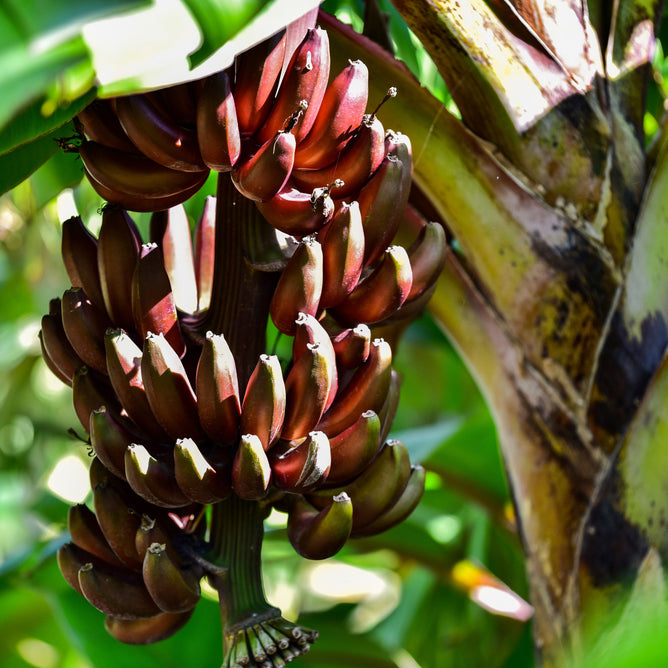
Banana ‘Red Dacca,’ also called ‘Red Cuban,’ has short, plump, reddish purple bananas that tend to have a sweeter taste and slightly longer shelf life than yellow bananas. They are best eaten when slightly soft and the inner flesh is creamy or light pink. ‘Red Dacca’ has a beautiful red growing stem and long green leaves that make it an attractive fruiting container plant or grow in the garden in zones 9-11. It needs full sun, with plenty of water and fertilizer during the growing season.
Available in a 4" pot.
✅60-Day Guarantee - Rest Easy, your plant is protected!
Learn more about our guarantee.
🪴Ready to Grow - This is a healthy starter plant, full of life!
📦Quality Plants Grown by Experts. Packaged with Care.
60
(MEW-suh)
Light: Full or partial sun, a southern, eastern or western exposure.
Temperature: For optimum growth, it is best to keep temperatures above 60°, especially during the winter months; however, they will tolerate temperatures down to just above freezing which will dramatically slow down growth.
Humidity: Preferably 50% or higher; however, they will tolerate low levels with no harm.
Watering: When actively growing, they need constant moisture. We recommend bringing the soil surface to slight dryness between waterings, try not to put the plant under severe drought stress, which will slow down its growth. When watering, thoroughly saturate soil until a little water runs out of the bottom of the pot.
Fertilizer: They are heavy feeders, use ½ tsp of fertilizer per gallon of water every week and more so, under full sun conditions which will expedite its growth. Under lower light and cool temperatures, reduce the frequency. When active growth stops in winter, discontinue feeding. Use a balanced fertilizer like a 15-15-15 or a blooming fertilizer like a 7-9-5.
Pruning: Prune off any yellowed leaves. Once the main shoot has flowered and fruited, it can be removed and the young shoots at the base can be allowed to grow. At this time, the plants can be divided to create a more typical ‘Banana Tree’.
Insects and Disease: Bananas have few problems with insects. Susceptible to spider mites under dry, hot conditions. They also have susceptibility to both root and foliar disease during the winter months under excessive soil moisture and cool conditions.
Comments: Musa are easy to grow and rewarding for the gardener due to their speed of growth, which can be optimized by warmth, water and fertilizer. When growing Musa basjoo outdoors: the trick to wintering it over in northern climates is the size of the plant and the depth of the mulch. Essentially, you need to keep the soil from freezing. In our area, this takes about 3 feet of settled mulch. That is 3 feet above and 3 feet out on all sides from the trunk of the plant. In colder regions, you might need more. Use something like straw that is light and fluffy and does not hold water. If you have some bark mulch, you can place a thick layer on the ground around the base of the plant, several feet out and 4 or 5 inches thick. This will also help keep the ground from freezing. The other thing that is important is to have a plant that is large enough. We like to have a trunk 3” or greater with some side shoots sprouting up. What we do is cut the plant off a foot from the ground and cover it up. What survives is the rhizome or bulb that is under the ground. The visible stem will turn to mush by spring but the bulb with its growing eye will re-sprout in late spring when the soil is warm.
Videos
Other Resources
They arrived healthy looking and packaged really good.
The plant arrived in perfect condition, was planted and was doing well. I left it in the care of my neighbor for two weeks, and when I returned, it was dead.
What was most impressive is that when I called customer service, there were no questions asked and they quickly replace the plant. I have never had such smooth customer service. The replacement plant is in the ground, in looking fantastic. The next purchase I make will be from Logee’s.
Great product
Plant came in a state of shock with the leaves wilted. Was ynsure ifnit would survive but ultimately its doung much better now
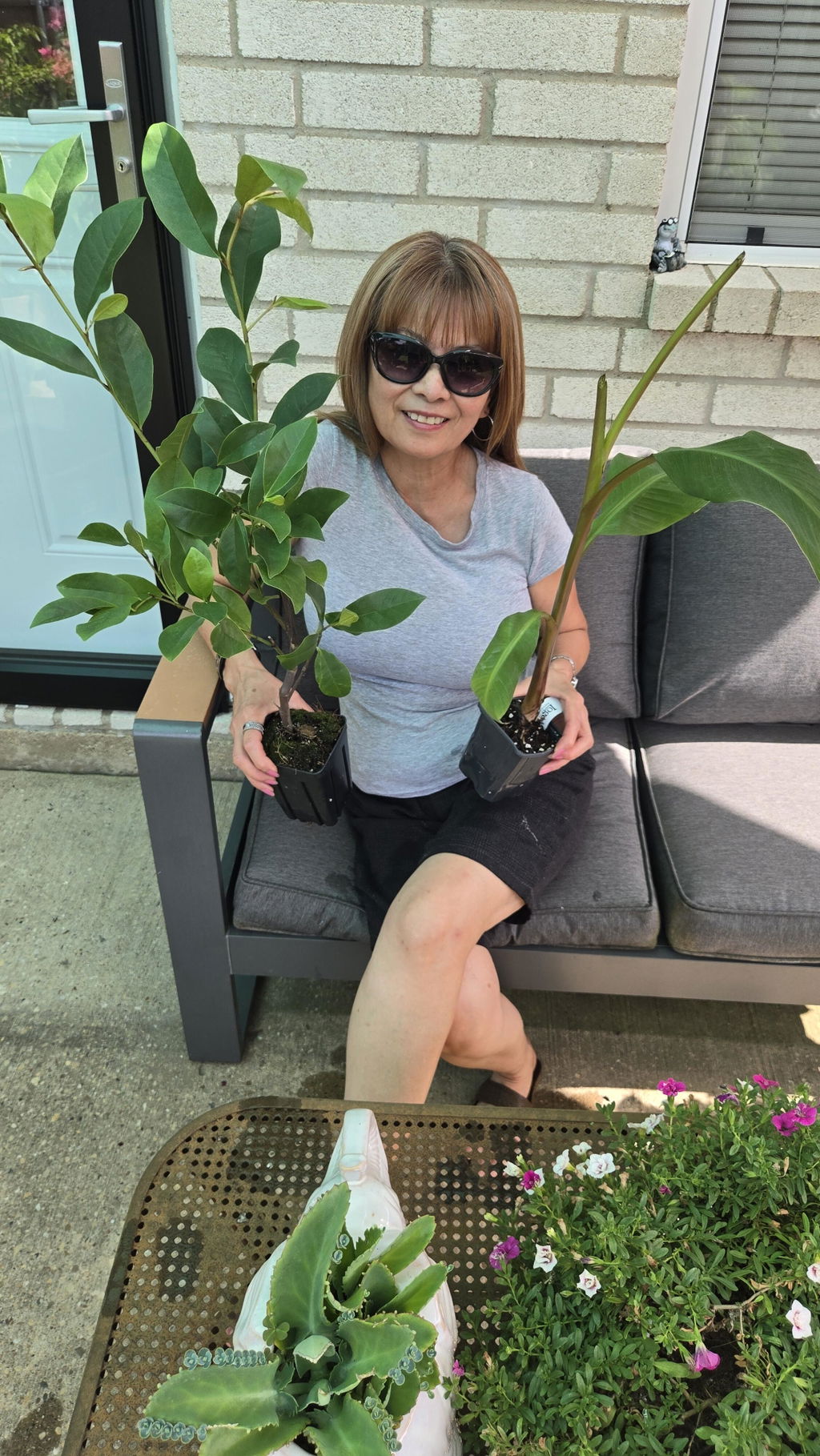
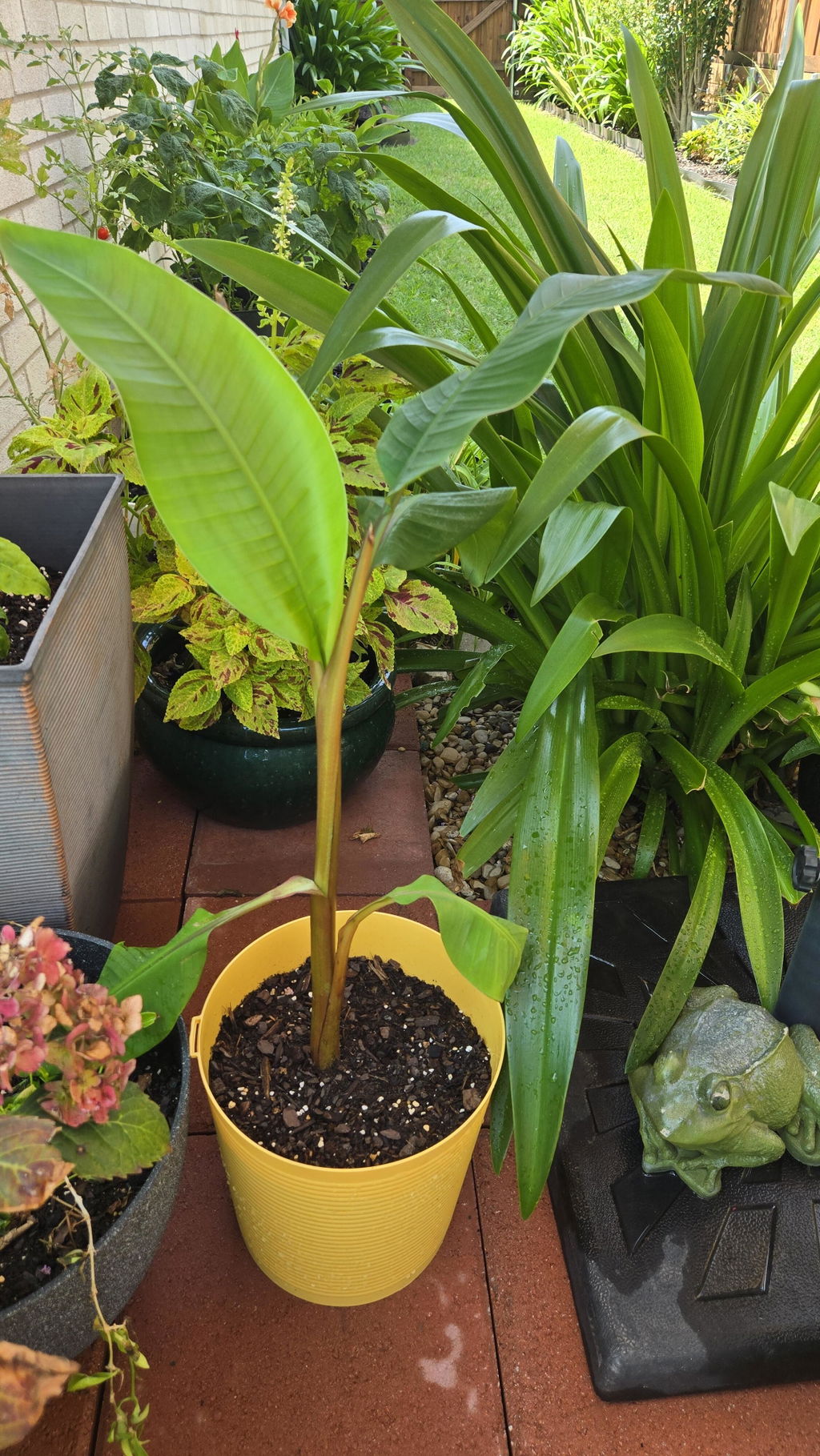
When I received the Red banana plant couldn’t believe how pretty it is along with the Cream Fairy Magnolia! I love them both! My husband took a picture of me with both plants in my hand right after they arrived by FedEx! They both in great conditions! Can’t wait to see them grow!
Include a custom handwritten card with your order

Add your personalized message
i
Your card will be handwritten by a real person and included with your shipment. Messages will be copied exactly as typed above.
Our team lovingly handwrites each card, and we kindly reserve the right to refuse messages that are hateful or inappropriate.
[message]
[title]
[message][subMessage]
Love it? Add to your wishlist
Your favorites, all in one place. Shop quickly and easily with the wishlist feature!