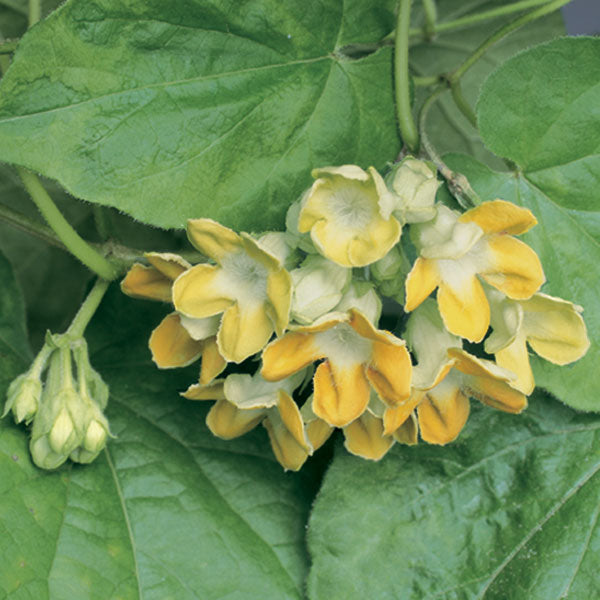
(tel-OHS-muh)
Light: Full or partial sun, a southern, eastern or western exposure.
Temperature: Maintain indoor temperatures above 60°, preferably 65°.
Humidity: Preferably 50% or higher; however, they will tolerate low levels with no harm.
Watering: Bring soil to a state of visual dryness between watering. When watering, thoroughly saturate soil until a little water runs out of the bottom of the pot. Growing in a clay pot will help maintain a healthy root system.
Fertilizer: Fertilize weekly or bi-weekly using ½ tsp of fertilizer per gallon of water. Use a balanced fertilizer like a 15-15-15 or a blooming fertilizer like a 7-9-5.
Pruning: The best time to prune is in late winter or early spring, just as growth resumes. They can be pruned at anytime if growth is excessive. It is important not to prune in late summer or fall, as they need as much foliage on their vines as possible to carry them through the winter.
Insects and Disease: They are susceptible to spider mite, white fly and mealybug. During the winter, they are highly susceptible to root diseases.
Comments: This is one of the most intensely fragrant flowers we grow. A climber loves warmth and grows primarily during the summer months in temperate areas of the country. During the winter, it goes into a semi-dormancy where it loses leaves and its growth stops. At this time, it needs warmth, good light, and careful attention to watering. Make sure that there is a period of dryness between waterings as they are prone to root rot at this time of the year. If it is grown outside, careful attention needs to be given to outbreaks of spider mite.