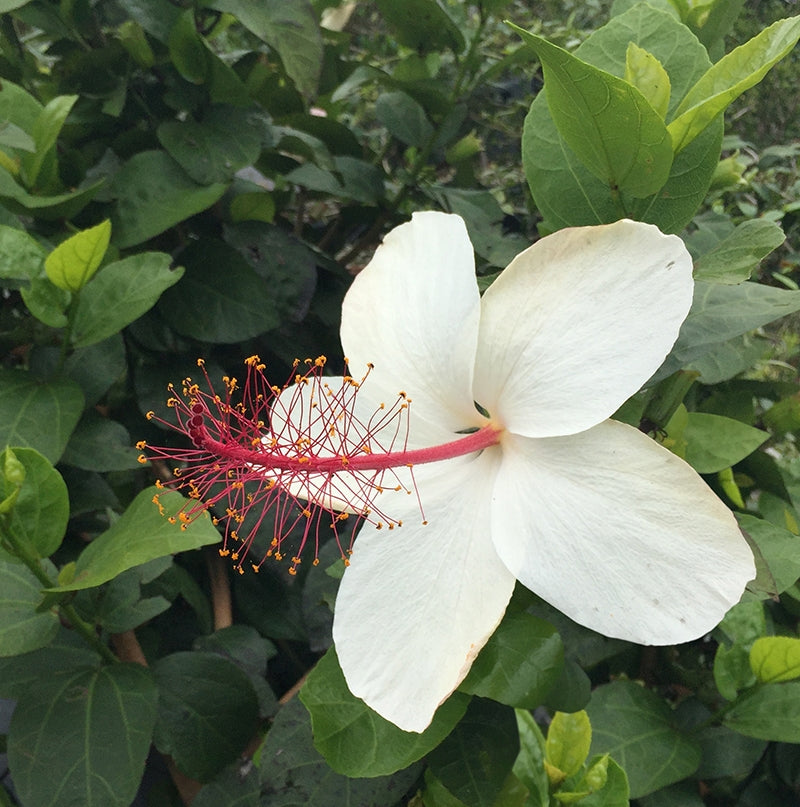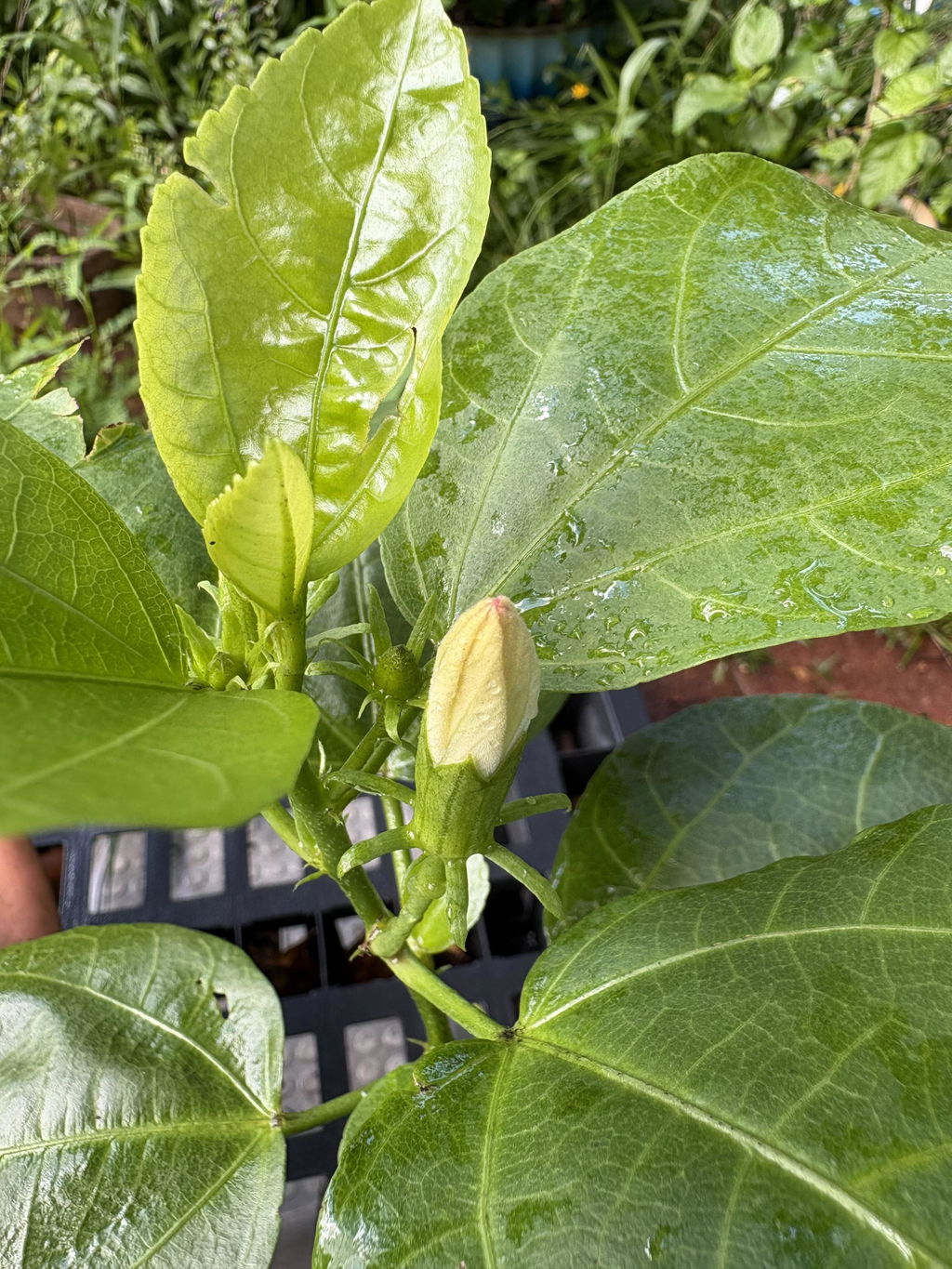
(hih-BIS-kus)
Light: Full sun, a southern exposure.
Temperature: Maintain indoor temperatures above 60°. They can suffer when grown at temperatures below 60° for extended periods.
Humidity: Preferably 50% or higher; however, they will tolerate low levels with no harm.
Watering: Bring the soil to a state of visual dryness between watering. When watering, thoroughly saturate the soil until a little water runs out of the bottom of the pot.
Fertilizer: They are moderate feeders so ¼ tsp of fertilizer per gallon of water once a week. Use a balanced fertilizer like a 15-15-15 or a blooming fertilizer like a 7-9-5. When growth stops in winter, discontinue feeding.
Pruning: Prune anytime they are too large or getting leggy. Remember that they flower on the tops of new growth and pruning will slow down flowering.
Insects and Disease: Hibiscus are susceptible to white fly and aphids as well as spider mite when grown under dry, hot conditions. They are susceptible to fungal root rots, especially during the winter months under excessive soil moisture and cool conditions. Growing them a little drier helps reduce the problem.
Comments: Hibiscus are spectacular flowering plants that require full direct sun, warm conditions and a balanced fertilizer to induce bloom. The long day length of summer is ideal for flowering. There are many cultivars, which seem to have varying degrees of ease to bloom.