Skip to product information
New Guinea Trumpet Vine (Tecomanthe dendrophila)

New Guinea Trumpet Vine (Tecomanthe dendrophila)

$26.00
SKU: R1578-4

4" Pot Size

4 available

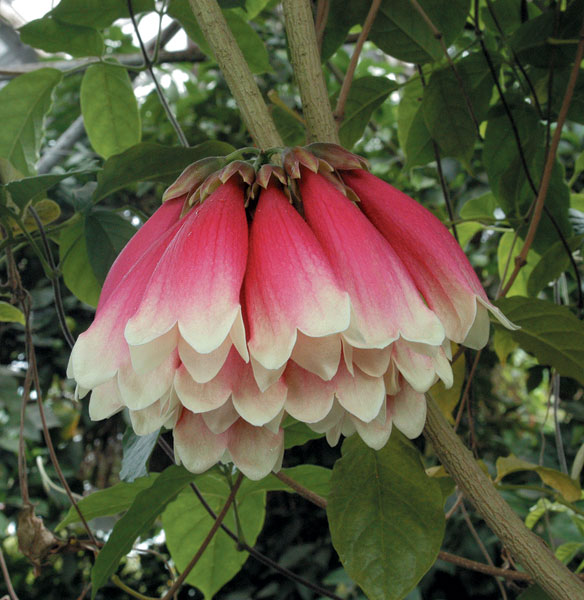
A fabulous woody climber that has the unique botanical ability to form blooms off its old woody stems. The bi-colored, 4" rose-red flowers have creamy white tips, which form in large umbels during late winter and spring. Give plenty of room to grow and witness a spectacular display unfold. This South Pacific native flowers well when we mimic its homeland conditions. Therefore, when the buds are forming, keep the plant well watered, imitating the rainy season. Flowering begins once the vine forms a rough bark, then blooms emerge from the same stem year after year.

✅60-Day Guarantee - Rest Easy, your plant is protected!

Learn more about our guarantee.

🪴Ready to Grow - This is a healthy starter plant, full of life!

What you will receive.

📦Quality Plants Grown by Experts. Packaged with Care.

Ensure a healthy transition to your home.

Light Requirements
  • Full Sun
  • Partial Sun
Plant Height (mature height when grown in a container)
4-8'
Bloom Season
  • Spring
  • Winter
Minimum Indoor Temperature

35

Plant Hardiness Zone
  • 10
Plant Care

(tek-oh-MANTH-ee)

Light: Full or partial sun, a southern, eastern or western exposure. To flower well, they need some direct sunlight. They are light sensitive, which means that the shortening day length of fall is what stimulates flowering.

Temperature: Maintain indoor temperatures above 40°.

Humidity: Preferably 50% or higher; however, they will tolerate low levels with no harm.

Watering: Bring soil to a state of visual dryness between watering. When watering, thoroughly saturate soil until a little water runs out of the bottom of the pot. Growing in a clay pot will help maintain a healthy root system.

Fertilizer: Fertilize using ½ tsp of fertilizer per gallon of water every two weeks or, if grown under high light, ½ tsp of fertilizer per gallon of water once a week. Use a balanced fertilizer like a 15-15-15 or a blooming fertilizer like a 7-9-5. They are rapid growers; so if growth becomes excessive, reduce the amount of fertilizer given.

Pruning: Do not prune until they begin flowering. Once they are blooming plants, they can be pruned to maintain size and form. This should be done immediately after flowering. Otherwise, the next year’s flowering can be disrupted.

Insects and Disease: Few problems with insects or diseases.

Recently Viewed