Skip to product information
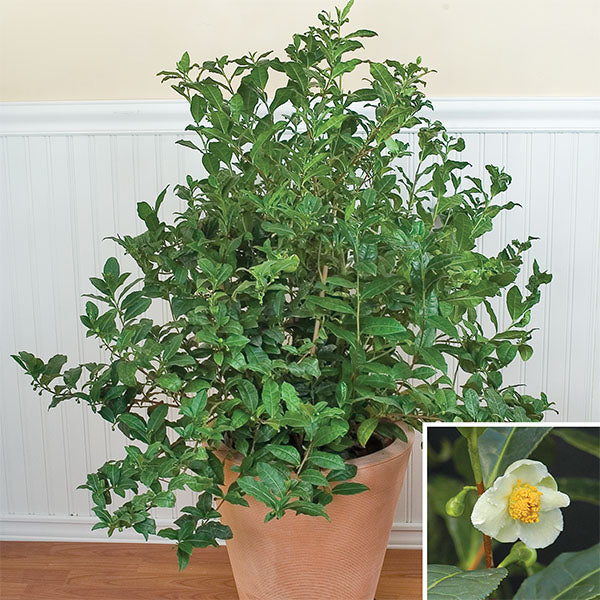
Tea Plant (Camellia sinensis)

Tea Plant (Camellia sinensis)

$32.00
SKU: R1412-4

4" Pot Size

75 available

It’s tea time! Camellia sinensis, commonly known as the Tea Plant, is a beloved species that has earned its place in history as the producer of one of the world's most popular beverages. Its young, succulent shoots yield an abundant supply of tea leaves, which can be processed into the flavorful and aromatic teas we all know and love. Did you know that the type of tea you get depends on how you dry and cure the leaves? If you're a fan of black tea, let the leaves oxidize before drying. For green tea, skip the oxidation step and go straight to drying. And if you prefer white tea, simply wither the leaves until they are dry, without any oxidation or rolling.

While Camellia sinensis is hardy in the southern United States, it can also be grown as a potted plant indoors during the winter in cooler climates. The Tea Plant makes a wonderful addition to indoor decor, thriving as a potted plant during the winter. Its dark green, glossy leaves and delicate, fragrant white flowers add an elegant touch to any living space. This versatile plant is perfect for anyone looking to grow their own tea and add a touch of elegance to their garden or home. Whether you're a tea connoisseur or simply looking for a charming addition to your indoor garden, the Tea Plant is a versatile and delightful choice.

Available in a 4" pot.

✅60-Day Guarantee - Rest Easy, your plant is protected!

Learn more about our guarantee.

🪴Ready to Grow - This is a healthy starter plant, full of life!

What you will receive.

📦Quality Plants Grown by Experts. Packaged with Care.

Ensure a healthy transition to your home.

Light Requirements
  • Full Sun
  • Partial Sun
Plant Height (mature height when grown in a container)
2-4'
Bloom Season
  • Spring
  • Winter
Minimum Indoor Temperature

35

Plant Hardiness Zone
  • 8
Plant Special Features
  • Edible
Plant Care

Tips for Success

  • Use fertilizer only at the beginning of active growth.
  • Water when soil surface appears dry and then thoroughly saturate the root ball.
  • Give partial sun year-round.
  • Give 30-40°F nighttime temperatures during the winter. Warm nights during the winter time will cause “bud blast.” Up to 59°F is okay.
  • Give a slightly acidic soil between (soil ph between 4.8 - 5.8)
  • Pinch back young cuttings to get full and bushy growth, although this discourages flowering early on.
  • 1 tablespoon of Epsom Salts/ one gallon of water given twice a year supplies their magnesium requirements.

(kuh-MEE-lee-a)

Light: Full or partial sun, a southern, eastern or western exposure.

Temperature: Although they are hardy in subfreezing temperatures as far north as zone 8 (zone 6 for the northern hardy varieties), maintain temperatures indoors above 35° and below 60° at night in the winter. Day temperatures can vary.

Humidity: Maintain humidity levels at 50% or higher; however, lower levels will do no harm for short periods.

Watering: Bring soil to a state of visual dryness between watering. When watering, thoroughly saturate soil until water comes through the bottom of the pot.

Fertilizer: Little or no fertilizer, as they prefer low fertility. Too much would harm them! If you do use fertilizer, use it in the very beginning of the spring only. Cottonseed meal is an excellent fertilizer for camellias. A handful placed on the soil surface at the beginning of the growing season is adequate. As they need magnesium, two applications a year of Epsom salts at 1 tbl per gallon of water will amend their nutrient needs.

Pruning: Prune after flowering. However, in pot culture, stems that are cut usually won’t flower the following year and will need two growth cycles to form buds. It is important to pinch and prune young plants to develop a branching structure as they can become loose and open in their form.

Insects and Disease: For the most part, insects or diseases do not bother them. When overfed and subject to damp soil conditions they do occasionally have difficulties with root diseases.

Comments: Camellias are slow growing, needing cool nights in the winter to mature the buds. It’s best to prune a young plant to form a branched structure and then let it grow out and form buds. Otherwise, they can get stalky as they get older. Periods of severe dryness can damage plants and disrupt the flowering, especially under too high soil fertility. They are prone to edge burn, which is browning of the tips of the leaves. This condition is not fatal but difficult to control.

Videos

Other Resources

Recently Viewed